GHK

GHK-Cu

Copper Peptide

Skin Regeneration and Anti-Aging Wound Healing Hair Follicle Stimulation Systemic Inflammation Reduction
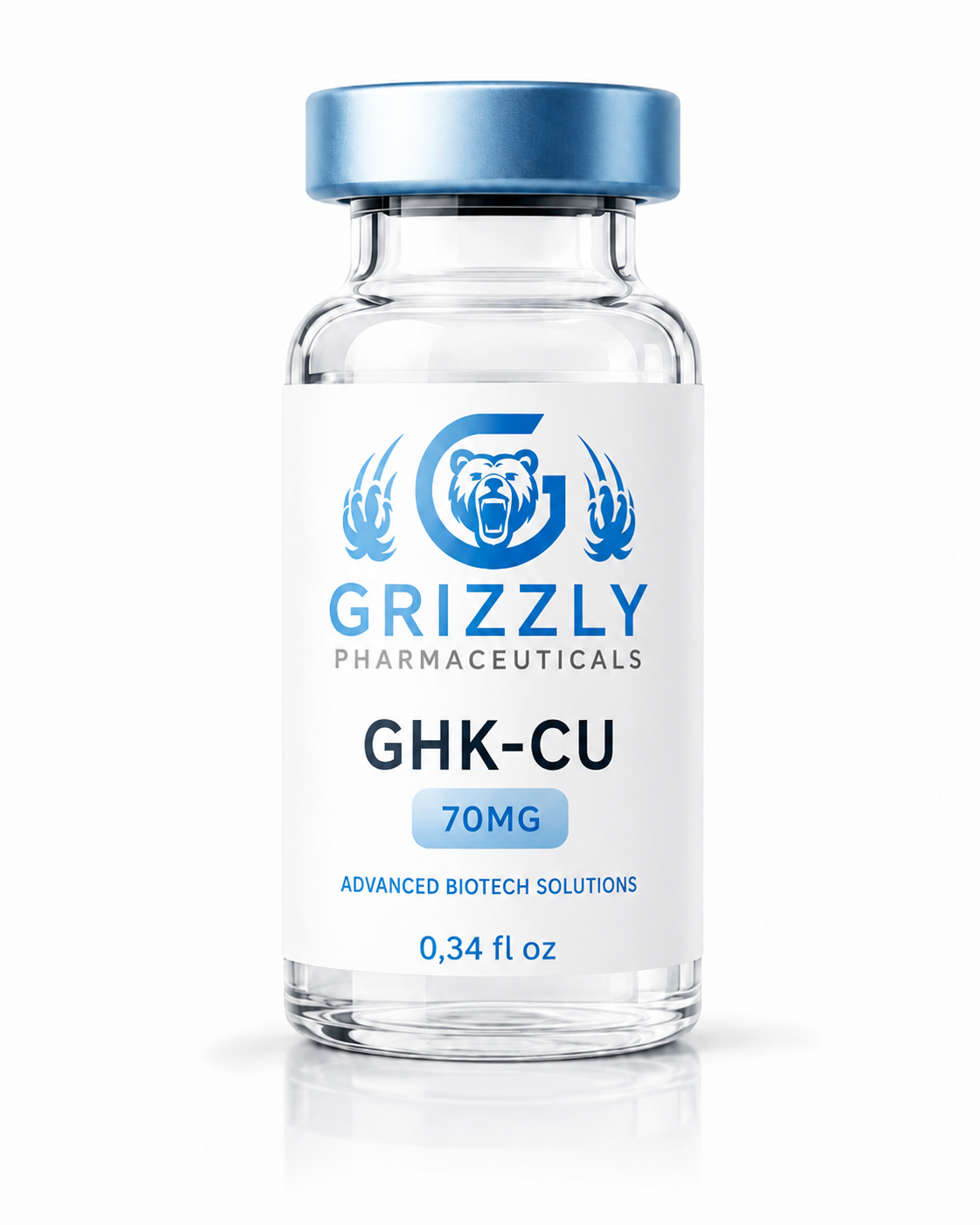
GHK-Cu 70MG

GHK-CU — 70MG

Dosage: 70 MG
$40.00 USD
1
View Cart
Lab-tested purity reference
Cold-chain handling support
Research-use only positioning

Disclaimer: This product is for laboratory research purposes only. Not for human consumption.

Research Protocol

Standardized reconstitution, handling, and storage guidelines for GHK-Cu in-vitro applications.

  • Reconstitution Guide
  • Storage Parameters
  • Handling Procedures
View Full Protocol

Compound Overview

GHK-Cu is a naturally occurring copper complex of the tripeptide glycyl-L-histidyl-L-lysine. It has a high affinity for copper and plays a crucial role in tissue remodeling, antioxidant defense, and stem cell stimulation. Its regenerative properties make it a staple in cosmetic and systemic anti-aging research.

Technical Specifications
340.38 g/mol (free) / ~404 g/mol (with Cu)
49557-75-7
>99.0%
Lyophilized Powder

Primary Research Focus

Skin Regeneration and Anti-Aging Wound Healing Hair Follicle Stimulation Systemic Inflammation Reduction

Research Protocols

Research Reference

These reference ranges are for laboratory research planning and educational comparison only. They are not instructions for human use or medical treatment.

Research Area Reference Range Study Timing Model Context
Skin Rejuvenation Models Low mg-range Short-cycle study designs Dermal / cellular research
Wound Remodeling Models Study dependent Acute-response windows Tissue repair research
Hair Follicle Models Low mg-range Repeated observation cycles Follicular signaling research
Anti-Aging Maintenance Models Study dependent Longer observation windows Cellular aging research
Inflammation Pathway Models Protocol dependent Marker-based analysis In-vitro analytical research
Timing

For research planning, timing is typically organized around defined observation windows, sample-handling consistency, and controlled environmental conditions. Always follow institutional research procedures and product-specific handling guidance.

Observed Research Timeline

Initial Response

Phase 1: Days 1–7

Immediate antioxidant effects and reduction in localized skin inflammation. Initial fibroblast stimulation.

0 25 50 75 100 Phase 1 Phase 2 Phase 3 Phase 4

What to Expect

  • Week 1: Antioxidant protection kicks in, reduced skin redness and inflammation, initial fibroblast activation
  • Week 2–4: Gene expression shifts toward regeneration, improved skin elasticity and texture, faster wound closure
  • Week 4–8: Visible collagen and elastin synthesis, reduction in fine lines, measurable scar remodeling
  • Week 8+: Long-term tissue remodeling, sustained hair follicle stimulation, systemic anti-aging benefits

Mechanism of Action

Phase 1
Gene Modulation
Phase 2
Collagen Synthesis
Phase 3
Tissue Remodeling

GHK-Cu acts as a signaling molecule that modulates gene expression, upregulating regenerative pathways and downregulating inflammatory and scar-forming pathways.

1

Gene Modulation

Has been shown to reset the expression of over 4,000 human genes back to a younger, healthier state, reversing age-related gene expression patterns.

2

Collagen & Elastin Synthesis

Directly stimulates fibroblasts to increase production of structural skin proteins, resulting in improved skin firmness, elasticity, and density.

3

Tissue Remodeling

Activates metalloproteinases to breakdown damaged tissue and scars while simultaneously promoting new, healthy tissue growth — creating a complete remodeling cycle.

Pharmacokinetics & Properties

Estimated Half-Life
Short (Rapidly binds to plasma proteins)
Bioavailability
Effective topically and subcutaneously
Clearance
Renal and hepatic
Molecular Weight
340.38 g/mol (without Cu) / ~404 g/mol (with Cu)

Clinical & Research Data

Extensive In-vitro & Dermatological Studies

Widely studied for wound healing, skin regeneration, and hair growth. GHK-Cu has been extensively evaluated across in-vitro, animal, and human dermatological trials.

Key Findings:
Significantly improves skin elasticity, clarity, and firmness in topical trials — measurable improvements seen as early as week 4.
Accelerates wound closure and increases antioxidant enzyme levels (superoxide dismutase, catalase) in injured tissue models.
Promotes hair follicle growth and enlargement comparable to minoxidil in animal models, while also improving follicle survival.

Safety & Monitoring Profile

Common Observations

  • Injection site pain (can be mitigated by further dilution with bacteriostatic water)
  • Mild, transient skin flushing at injection site
  • Mild systemic copper elevation with chronic high doses

Required Monitoring

  • Serum copper and zinc levels to prevent mineral imbalances during extended research cycles
  • Monitor for signs of copper toxicity (nausea, abdominal pain) at supraphysiological doses
For laboratory research use only. Information on this page is provided for educational reference and compound comparison. It is not medical advice and is not intended to diagnose, treat, cure, or prevent any disease.
Research FAQ

GHK-CU Questions.

Quick answers about GHK-CU handling, research context, storage, and product details.

What is GHK-CU?

GHK-CU is a copper-binding peptide complex commonly discussed in research involving tissue remodeling, skin biology, wound-healing models, collagen signaling, and cellular repair pathways. This product is intended strictly for laboratory research and analytical use only.

What size is this GHK-CU product?

This product is GHK-CU — 70MG. It is supplied as a lyophilized research compound for laboratory and in-vitro applications.

Is GHK-CU intended for human use?

No. GHK-CU products on this site are intended for laboratory research purposes only. They are not intended for human consumption, diagnostic use, therapeutic use, or self-administration.

How should GHK-CU be stored?

GHK-CU should typically be stored in a cool, dry, and light-protected environment according to the product label and accompanying documentation. For longer-term research storage, lyophilized peptides are commonly kept refrigerated or frozen depending on lab protocol requirements.

What does lyophilized mean?

Lyophilized means the compound has been freeze-dried into a stable powder form. This format is commonly used for research peptides because it can help improve stability during storage and transport before reconstitution in a controlled laboratory setting.

Does this product include a Certificate of Analysis?

When available, product documentation and lab-related testing information may be provided through the site’s lab results or documentation section. Check the product page, lab results area, or contact support if you need batch-specific information.

What research areas is GHK-CU commonly associated with?

GHK-CU is commonly discussed in research related to skin regeneration, collagen and elastin signaling, wound-healing models, oxidative stress, inflammation pathways, and hair follicle biology.

Can GHK-CU be paired with other research compounds?

In research settings, GHK-CU may be compared alongside compounds such as MOTS-C, BPC-157, TB-500, Tesamorelin, or longevity-focused blends depending on the study objective. Any compatibility assessment should be performed by qualified researchers following appropriate lab protocols.

Who should purchase GHK-CU?

GHK-CU should only be purchased by qualified individuals or organizations using it for legitimate laboratory research, analytical testing, or educational research purposes. It is not sold for personal therapeutic use.

Research-use notice: The information provided in this FAQ is for educational and reference purposes only. It is not medical advice and should not be interpreted as instructions for human use.