
MTC

MOTS-c

Mitochondrial Derived Peptide
Mitochondrial Function Exercise Mimetics Metabolic Regulation Cellular Energy
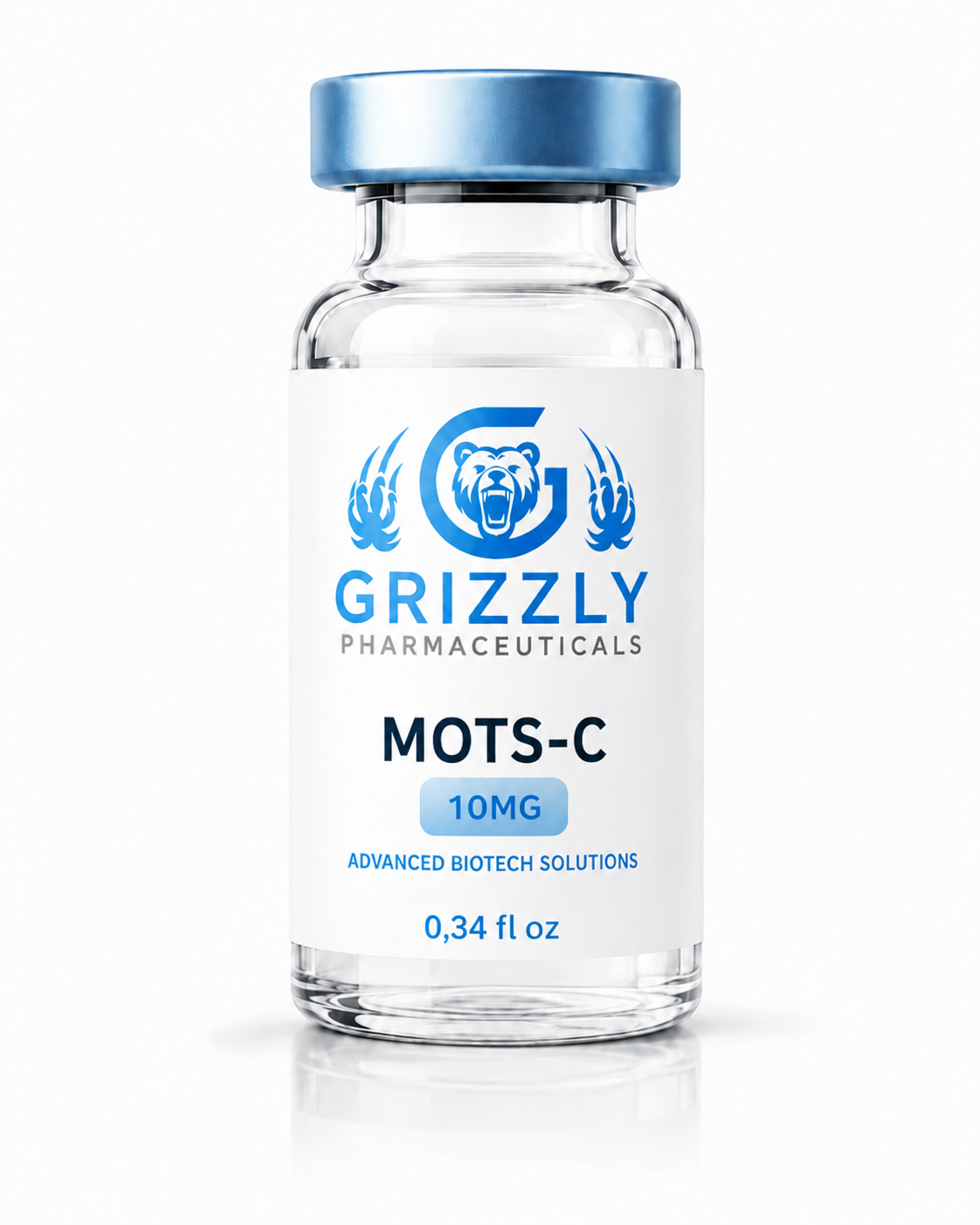
MOTS-c 10MG

MOTS-c

Dosage: 10MG
$40.00 CAD
1

Disclaimer: This product is for laboratory research purposes only. Not for human consumption.

Research Protocol

Standardized handling, dosing, and storage guidelines for MOTS-c in metabolic and mitochondrial research applications.

  • Administration Guide
  • Storage Parameters
  • Handling Procedures
View Full Protocol

Compound Overview

MOTS-c (Mitochondrial Open Reading Frame of the 12S rRNA-c) is a naturally occurring mitochondrial-derived peptide that plays a critical role in metabolic regulation and cellular energy homeostasis. Primarily acting as an exercise mimetic, MOTS-c targets skeletal muscle to upregulate AMPK pathways, thereby enhancing insulin sensitivity and promoting glucose utilization. It is a premier compound for research involving obesity, metabolic syndrome, and age-related mitochondrial dysfunction.

Technical Specifications

MITOCHONDRIAL PEPTIDE
Met-Arg-Trp-Gln-Glu-Met-Gly-Tyr-Ile-Phe-Tyr-Pro-Arg-Lys-Leu-Arg
2174.6 g/mol
1627580-64-6
>99.0%
Lyophilized Powder
Synthetic Peptide

Primary Research Focus

Mitochondrial Function Exercise Mimetics Metabolic Regulation Cellular Energy Insulin Sensitivity Anti-Aging

Expected Results Timeline

Cellular Priming

Phase 1: Days 1-7

Upregulation of AMPK pathways and initial mitochondrial biogenesis. Subjects may notice improved cellular energy markers.

0 25 50 75 100 Days 1-7 Wks 2-4 Wks 4-8 Wks 8+

Compare Similar Compounds

Compound Primary Mechanism Key Benefit Admin.
MOTS-c Mitochondrial Derived Peptide Cellular energy & metabolic homeostasis SubQ
5-Amino-1MQ NNMT Inhibitor Cellular energy expenditure & fat metabolism Oral
Tirzepatide GLP-1/GIP Agonist Appetite suppression & glycemic control SubQ
Tesamorelin GHRH Analogue Visceral fat reduction via GH pathways SubQ

Mechanism of Action

Step 1AMPK Activation
Step 2Mitochondrial Biogenesis
Step 3Insulin Sensitization

MOTS-c operates primarily within the mitochondria and nucleus, bridging cellular energy sensing with systemic metabolic regulation.

1

AMPK Activation

Stimulates AMP-activated protein kinase, a primary regulator of cellular energy homeostasis, mimicking the effects of exercise.

2

Mitochondrial Biogenesis

Promotes the growth and division of mitochondria, increasing the overall cellular energy capacity and efficiency.

3

Insulin Sensitization

Enhances glucose uptake specifically in skeletal muscle tissue, improving systemic metabolic function and reducing insulin resistance.

Pharmacokinetics & Properties

Relatively short plasma half-life, but initiates long-lasting intracellular signaling cascades.

High via subcutaneous injection. Not suitable for oral administration due to rapid degradation.

Rapidly degraded by circulating peptidases following cellular uptake.

Intracellular metabolic regulators including AMPK and SIRT1 pathways.

Clinical & Research Data

Metabolic Research — Exercise Mimetics

MOTS-c has been extensively studied for its ability to mimic the metabolic effects of exercise and combat diet-induced obesity.

Key Research Findings:
  • Demonstrates significant improvements in exercise capacity and metabolic function in diet-induced obesity models.
  • Prevents age-dependent and diet-dependent insulin resistance in skeletal muscle.
  • Promotes cellular resistance to metabolic stress and enhances mitochondrial efficiency.

Safety & Monitoring Profile

Common Observations

  • Generally well-tolerated in animal models.
  • Mild, transient injection site reactions.
  • Increased energy expenditure markers.

Research Considerations

  • Monitor for transient hypoglycemia, especially if combined with other metabolic agents.
  • Assess metabolic panels during prolonged research protocols.

Frequently Asked Questions

An exercise mimetic is a compound that replicates the physiological and metabolic benefits of physical exercise at a cellular level, such as activating AMPK pathways and increasing mitochondrial biogenesis, without actual physical exertion.
Unreconstituted lyophilized powder should be stored in a freezer at -20°C. Once reconstituted with bacteriostatic water, the vial must be kept refrigerated (2°C to 8°C) and used within 30 days to maintain optimal potency.
Unlike compounds that primarily target appetite suppression or direct lipolysis, MOTS-c works intracellularly to optimize mitochondrial function and insulin sensitivity, effectively reprogramming cellular energy utilization.
Available Research Products

Related Research Products.

Explore research-use products associated with this compound profile, including available formats, related blends, and supporting lab documentation where available.

MOTS-c FAQ

MOTS-c Questions.

Deeper research-focused questions about MOTS-c, mitochondrial-derived peptide biology, AMPK-related pathways, metabolic research, cellular stress response, storage, and batch documentation.

What is MOTS-c?

MOTS-c is a mitochondrial-derived peptide studied in metabolic, cellular stress, and energy regulation research. It is commonly discussed in relation to mitochondrial signaling, AMPK-associated pathways, glucose regulation models, insulin sensitivity research, exercise adaptation, and age-related cellular stress response. On this site, MOTS-c is positioned strictly as a laboratory research reference compound.

What does MOTS-c stand for?

MOTS-c stands for mitochondrial open reading frame of the 12S rRNA type-c. The name reflects where the peptide is encoded and why it is grouped with mitochondrial-derived peptides. Unlike many peptides that are encoded by nuclear DNA, MOTS-c is associated with a short open reading frame within the mitochondrial genome, making it especially interesting in mitochondrial signaling research.

Why is MOTS-c considered a mitochondrial-derived peptide?

MOTS-c is considered a mitochondrial-derived peptide because it is encoded within the mitochondrial genome rather than being classified as a traditional nuclear-encoded peptide. This distinction is important because mitochondrial-derived peptides are studied as signaling molecules that may connect mitochondrial function with broader cellular responses, including metabolic adaptation, stress response, and energy balance research models.

How does MOTS-c relate to AMPK signaling?

MOTS-c is frequently discussed in connection with AMPK-related signaling because AMPK acts as a cellular energy sensor in many metabolic research models. In MOTS-c literature, AMPK-associated pathways are often examined when researchers study cellular energy status, glucose handling models, mitochondrial stress response, and metabolic adaptation. This makes AMPK one of the more important pathway references when building a research profile around MOTS-c.

Why is MOTS-c studied in metabolic research?

MOTS-c is studied in metabolic research because mitochondria play a central role in cellular energy production, nutrient sensing, and stress adaptation. Research discussions around MOTS-c often focus on metabolic homeostasis, glucose regulation models, insulin sensitivity endpoints, skeletal muscle signaling, and how mitochondria may communicate cellular energy status beyond simple ATP production. This gives MOTS-c a distinct research profile compared with peptides focused mainly on tissue repair or growth hormone pathways.

What is the connection between MOTS-c and exercise adaptation research?

MOTS-c is often discussed in exercise adaptation research because exercise places increased energy demands on skeletal muscle and mitochondrial systems. Researchers may examine MOTS-c in relation to metabolic stress signaling, skeletal muscle adaptation, glucose handling, and AMPK-related pathways. This does not mean MOTS-c products are intended for performance enhancement; it simply reflects that exercise biology is one of the research areas where mitochondrial signaling peptides are commonly explored.

How does MOTS-c relate to aging and cellular stress research?

MOTS-c appears frequently in aging and cellular stress research because mitochondrial function is closely tied to cellular resilience, energy balance, and stress adaptation. Research models may examine MOTS-c in relation to oxidative stress response, mitochondrial signaling, metabolic dysfunction, and changes in cellular energy regulation over time. For a resource page, this makes MOTS-c a strong fit for topics involving mitochondrial health research and age-associated metabolic pathways.

Is MOTS-c the same type of compound as BPC-157 or TB-500?

No. MOTS-c is usually categorized as a mitochondrial-derived peptide, while BPC-157 and TB-500 are more commonly discussed in tissue repair, wound healing, angiogenesis, and recovery-related research models. MOTS-c has a more metabolic and mitochondrial signaling profile, which makes it useful to separate from repair-focused peptide pages when building research categories and internal links.

How is MOTS-c different from growth hormone secretagogue peptides?

MOTS-c is different from common growth hormone secretagogue peptides because it is not primarily categorized around GHRH or ghrelin receptor pathways. Compounds like Ipamorelin, Sermorelin, and CJC-1295 are generally discussed in growth hormone axis research, while MOTS-c is usually positioned around mitochondrial signaling, AMPK-related metabolic research, cellular stress adaptation, and energy regulation models.

What research endpoints are commonly associated with MOTS-c?

MOTS-c research discussions may involve endpoints related to AMPK signaling, glucose metabolism models, insulin sensitivity markers, mitochondrial stress response, skeletal muscle signaling, inflammatory pathway research, oxidative stress response, and metabolic adaptation. The exact endpoints depend on the model, study design, and analytical methods being used.

Is MOTS-c sold for research use only?

Yes. MOTS-c products listed on Symbiotic Pharmaceuticals are intended for laboratory research and analytical reference use only. They are not intended for human consumption, animal consumption, diagnostic use, therapeutic use, or self-administration. Any discussion on this page is provided for educational and research-reference purposes only.

How should MOTS-c be stored for research handling?

Storage requirements can vary by product format, batch, and label instructions. For research handling, follow the product label and applicable laboratory storage standards. In general, research peptides should be protected from unnecessary heat, light, moisture, and repeated temperature changes because these conditions may affect long-term stability and handling quality.

Are lab results or COAs available for MOTS-c?

Available certificates of analysis and batch documentation can be reviewed through the Lab Results / COA page. Documentation availability may vary by product and inventory lot. Where available, batch documentation may include product identification, purity-focused testing references, and supporting analytical documentation.

For Research Purposes Only

The information provided in this resource hub is for educational and informational purposes only. These products are not intended to diagnose, treat, cure, or prevent any disease.