Growth Hormone-Releasing Hormone (GHRH) Analogue
Disclaimer: This product is for laboratory research purposes only. Not for human consumption.
Standardized handling, dosing, and storage guidelines for Sermorelin in endocrine and anti-aging research applications.
Sermorelin is a synthetic 29-amino acid peptide analogue of naturally occurring Growth Hormone-Releasing Hormone (GHRH). By binding to specific receptors in the pituitary gland, it stimulates the endogenous production and pulsatile secretion of human growth hormone (hGH). Unlike synthetic hGH therapy which can suppress natural production, Sermorelin preserves the body's natural feedback loops, making it highly valuable in research focusing on anti-aging, sleep architecture, and body composition improvement.
Initial upregulation of pituitary GH pulses. Subjects typically report rapid improvements in deep, restorative sleep patterns and feeling more rested upon waking.
| Compound | Primary Mechanism | Key Benefit | Admin. |
|---|---|---|---|
| Sermorelin | GHRH Analogue | Natural GH pulses & sleep | SubQ |
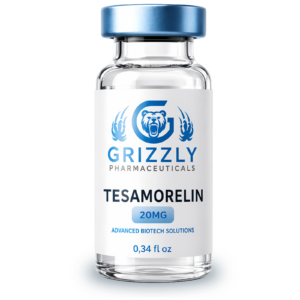
| Tesamorelin | GHRH Analogue | Visceral fat reduction | SubQ |
| Ipamorelin | GHRP | Selective GH release | SubQ |
| Synthetic HGH | Direct GH Replacement | Immediate IGF-1 spike | SubQ / IM |
Sermorelin mimics the natural hormone GHRH, prompting the body to produce its own growth hormone in a controlled, natural manner.
Binds directly to GHRH receptors in the anterior pituitary gland, signaling the body that it is time to produce growth hormone.
Unlike synthetic HGH which causes a sustained unnatural spike, Sermorelin induces pulsatile GH release, matching the body's natural circadian rhythm.
The increased GH travels to the liver, where it stimulates the production of Insulin-like Growth Factor 1 (IGF-1), the primary mediator of cellular growth and repair.
Very short (approximately 10-20 minutes in plasma), but sufficient to trigger a significant GH pulse.
High via subcutaneous injection. Ineffective orally due to degradation by digestive enzymes.
Rapidly cleaved by peptidases in the bloodstream and cleared renally.
Specific GHRH receptors on somatotrophs in the anterior pituitary gland.
Sermorelin has a long history of clinical research demonstrating its efficacy in safely elevating IGF-1 levels.
A comparative analysis of safety profiles, feedback loop preservation, and long-term efficacy.
SLEEP SCIENCEExplores how restoring youthful GH pulses dramatically improves sleep architecture and recovery.
ANTI-AGINGInvestigates the correlation between Sermorelin administration, IGF-1 levels, and vitality markers.
Explore research-use products associated with this compound profile, including available formats, related blends, and supporting lab documentation where available.
Explore supporting tools, protocol references, and batch documentation to help navigate research-use product information.
Review reference-oriented handling, preparation, and storage notes for laboratory research workflows.
View protocolsUse our research calculator for reference preparation workflows and lab-focused planning support.
Open calculatorAccess available batch documentation, lab testing references, and certificates of analysis where available.
View COAsDeeper research-focused questions about Sermorelin, GHRH (1-29), growth hormone-releasing hormone receptor signaling, pituitary-axis research, GH/IGF-1 models, storage, and batch documentation.
Sermorelin is a synthetic peptide commonly discussed as a growth hormone-releasing hormone analogue. In research contexts, Sermorelin is associated with GHRH (1-29), growth hormone-releasing hormone receptor signaling, anterior pituitary response models, GH secretion research, and downstream IGF-1 axis studies. On this site, Sermorelin is positioned strictly as a laboratory research reference compound.
Sermorelin acetate refers to the acetate salt form of Sermorelin used in many research and reference contexts. The active research identity is still Sermorelin, a GHRH (1-29) analogue, while the acetate portion describes the salt form associated with the material. For SEO clarity, it is useful to include both “Sermorelin” and “Sermorelin acetate” because researchers may search for either version.
Yes. Sermorelin is a peptide and is commonly described as a 29-amino-acid analogue or fragment of human growth hormone-releasing hormone. This makes it different from small-molecule research compounds such as Bromantane or 5-Amino-1MQ, and different from coenzyme compounds such as NAD+. For site structure, Sermorelin belongs in the GHRH analogue and growth hormone axis research category.
Sermorelin is commonly discussed as a growth hormone-releasing hormone analogue because it corresponds to the biologically active N-terminal portion of GHRH. In research models, this relationship is used to study GHRH receptor signaling, anterior pituitary response, GH release, and downstream IGF-1 axis activity. A Sermorelin page should use GHRH analogue language rather than describing the compound as growth hormone itself.
GHRH (1-29) refers to the first 29 amino acids of growth hormone-releasing hormone. This N-terminal fragment is commonly discussed as the biologically active portion associated with GHRH receptor signaling. Sermorelin is often described with this terminology because its research profile centers on GHRH (1-29)-related pituitary-axis signaling rather than direct growth hormone replacement or receptor agonism outside the GHRH pathway.
The growth hormone-releasing hormone receptor, often shortened to GHRH receptor or GHRHR, is the receptor system commonly discussed in relation to Sermorelin and other GHRH analogue research compounds. In endocrine-axis models, GHRH receptor signaling is studied in connection with pituitary somatotroph response, GH secretion, cAMP-linked signaling, and downstream IGF-1 pathway markers.
Sermorelin is studied in GH and IGF-1 axis research because GHRH receptor activation can influence pituitary growth hormone release, which may connect downstream to insulin-like growth factor 1 response in research models. This places Sermorelin in the endocrine-axis research category alongside other GHRH analogues and growth hormone secretagogue compounds. Page copy should frame this as laboratory pathway research, not as anti-aging, bodybuilding, recovery, or hormone-treatment language.
Sermorelin and CJC-1295 are both commonly discussed as GHRH analogue research compounds, but they are not identical. Sermorelin is typically discussed as GHRH (1-29), while CJC-1295 is a modified GHRH analogue. CJC-1295 With DAC includes a Drug Affinity Complex modification associated with longer-acting albumin-binding pharmacokinetic research, while Sermorelin is usually positioned as the shorter GHRH (1-29) reference analogue.
Sermorelin and Ipamorelin are both connected to growth hormone axis research, but they work through different pathway categories. Sermorelin is commonly discussed as a GHRH analogue that relates to growth hormone-releasing hormone receptor signaling. Ipamorelin is more closely associated with growth hormone secretagogue receptor and ghrelin receptor research. These pages should be internally linked but kept separate because the mechanisms and SEO angles are different.
Sermorelin and Tesamorelin are both commonly discussed in the GHRH analogue research category, but they should not be treated as interchangeable. Sermorelin is typically described as GHRH (1-29), while Tesamorelin is a modified GHRH analogue with a distinct regulatory and pharmaceutical research history. A Sermorelin page should focus on GHRH (1-29), pituitary-axis signaling, and GH/IGF-1 research models rather than borrowing clinical or product-specific claims from Tesamorelin.
No. Sermorelin is not the same as HGH or growth hormone. Sermorelin is commonly discussed as a GHRH analogue that interacts with GHRH receptor pathways in pituitary-axis research. Growth hormone itself is the downstream hormone being studied in GH secretion models. This distinction is important because Sermorelin should be described as a GH-axis research peptide, not as growth hormone replacement or a direct HGH product.
Sermorelin is commonly associated with research areas involving GHRH receptor signaling, pituitary-axis response, somatotroph cell models, GH secretion, IGF-1 response, endocrine pulsatility, cAMP-linked receptor activity, growth hormone deficiency model research, and comparative studies involving GHRH analogues or growth hormone secretagogues. It is best positioned as a GHRH analogue research peptide rather than a repair peptide, melanocortin compound, metabolic receptor agonist, or mitochondrial peptide.
Sermorelin research discussions may involve endpoints related to GHRH receptor activity, pituitary somatotroph response, GH secretion, IGF-1 response, cAMP-linked signaling, endocrine pulsatility, hormone-axis markers, receptor selectivity, and comparative analysis against CJC-1295, Ipamorelin, Tesamorelin, or other GH-axis research compounds. The exact endpoints depend on the study model, analytical methods, receptor focus, and hormone-axis design.
No. Sermorelin is not the same type of research compound as BPC-157, TB-500, or Retatrutide. BPC-157 and TB-500 are commonly discussed around tissue-support, repair-associated, cell-migration, and extracellular matrix research. Retatrutide is typically discussed around GIP, GLP-1, glucagon, and metabolic receptor research. Sermorelin belongs in the GHRH analogue and growth hormone axis research category.
Sermorelin should not be presented on this page as a dietary supplement, anti-aging product, bodybuilding product, recovery product, hormone therapy, growth hormone treatment, or self-administered compound. Research-use material sold by Symbiotic Pharmaceuticals should not be confused with any regulated pharmaceutical product, prescription product, diagnostic product, clinical protocol, or consumer wellness product. This page is written only for educational reference and laboratory research positioning.
Storage requirements can vary by product format, batch, and label instructions. For research handling, follow the product label and applicable laboratory storage standards. In general, research peptides should be protected from unnecessary heat, light, moisture, contamination, oxidation, and repeated temperature changes because these conditions may affect long-term stability and handling quality.
Available certificates of analysis and batch documentation can be reviewed through the Lab Results / COA page. Documentation availability may vary by product and inventory lot. Where available, batch documentation may include product identification, purity-focused testing references, assay references where applicable, and supporting analytical documentation.
Yes. Sermorelin products listed on Symbiotic Pharmaceuticals are intended for laboratory research and analytical reference use only. They are not intended for human consumption, animal consumption, diagnostic use, therapeutic use, hormone treatment, anti-aging use, bodybuilding use, recovery use, growth hormone treatment, injection use, or self-administration. Any discussion on this page is provided for educational and research-reference purposes only.
The information provided in this resource hub is for educational and informational purposes only. These products are not intended to diagnose, treat, cure, or prevent any disease.