Thymosin Beta-4 Analogue
Disclaimer: This product is for laboratory research purposes only. Not for human consumption.
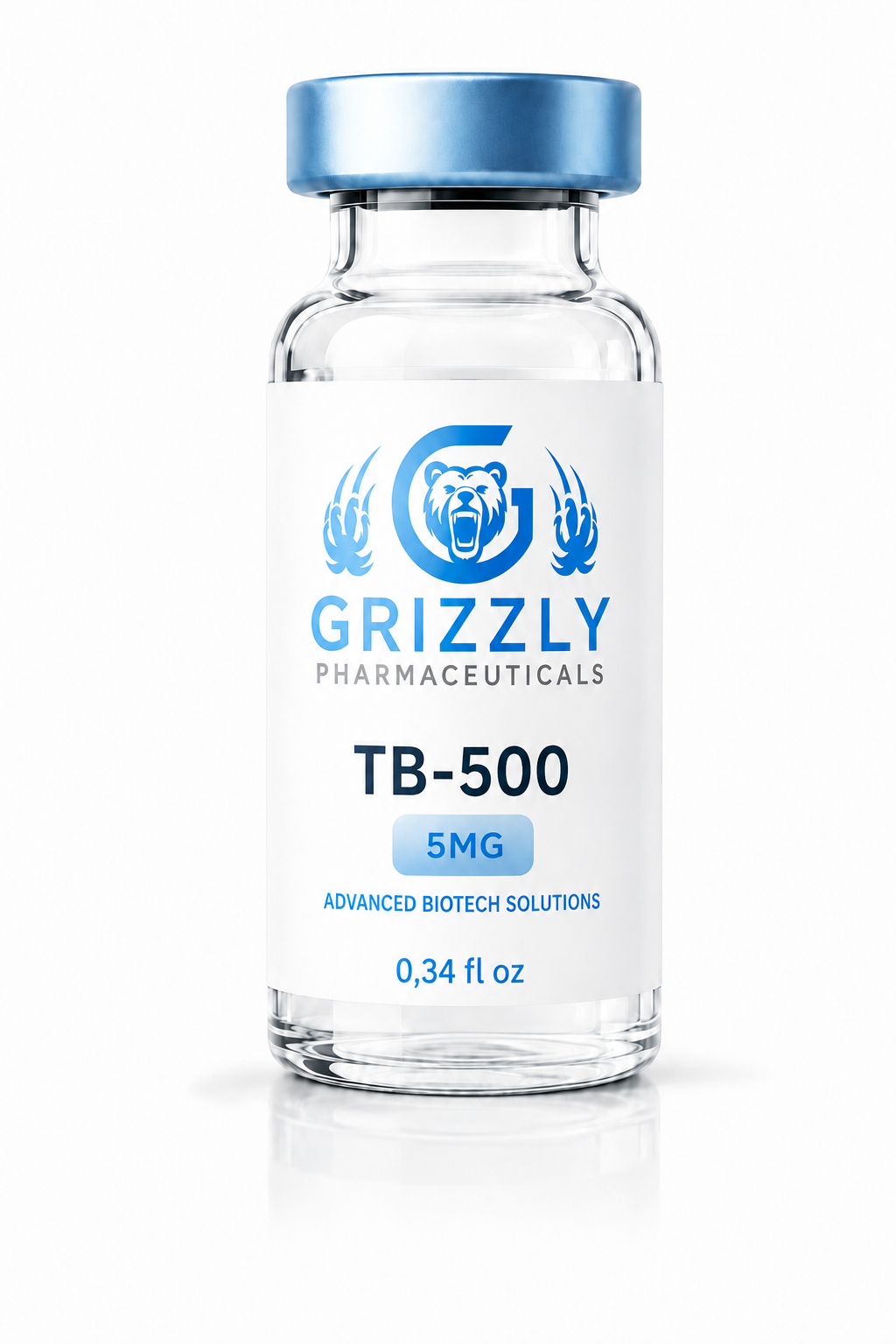
Standardized handling, dosing, and storage guidelines for TB-500 in regenerative and anti-inflammatory research applications.
TB-500 is a synthetic version of the naturally occurring peptide Thymosin Beta-4. It plays a vital role in building new blood vessels, new small muscle tissue fibers, cell migration, and blood cell reproduction. Because of its low molecular weight, TB-500 possesses the unique ability to travel systemically through the body to locate sites of injury. It is widely researched for its ability to promote rapid healing of wounds, muscles, tendons, and ligaments while significantly reducing inflammation.
Upregulation of actin binding. Systemic reduction in acute inflammation and the beginning of new blood vessel formation near injury sites.
| Compound | Primary Mechanism | Key Benefit | Admin. |
|---|---|---|---|
| TB-500 | Actin Binding & Angiogenesis | Systemic tissue & muscle repair | SubQ / IM |
| BPC-157 | VEGF Upregulation | GI healing & localized tendon repair | SubQ / Oral |
| GHK-Cu | Copper Peptide | Dermal repair & collagen synthesis | SubQ |
| Wolverine Stack | TB-500 + BPC-157 Blend | Synergistic total body recovery | SubQ |
The primary action of TB-500 lies in its ability to upregulate actin, a cellular protein essential for cell structure, mobility, and the formation of new tissue networks.
Binds to actin, promoting cellular migration and the rapid formation of new tissue structures at sites of injury.
Stimulates the creation of new blood vessels, dramatically improving nutrient delivery and waste removal in damaged tissues.
Reduces inflammatory cytokines systemically, creating a more favorable environment for rapid cellular regeneration.
Relatively long half-life compared to other peptides, allowing for less frequent administration (typically 1-2 times per week).
High via subcutaneous injection. Its low molecular weight allows it to travel systemically through the body.
Primarily cleared via enzymatic degradation in the blood and tissues.
Highly specific for actin-binding proteins, facilitating cellular structural changes and migration.
TB-500 has been extensively studied for its profound effects on muscle, tendon, and ligament recovery, particularly in cases of acute injury.
Explores how Thymosin Beta-4 analogues facilitate rapid cellular movement to injury sites.
ANGIOGENESISA deep dive into how TB-500 improves nutrient delivery to poorly vascularized tissues like tendons.
SYNERGYReviews the compounded efficacy of stacking systemic and localized healing peptides.
Explore research-use products associated with this compound profile, including available formats, related blends, and supporting lab documentation where available.
Explore supporting tools, protocol references, and batch documentation to help navigate research-use product information.
Review reference-oriented handling, preparation, and storage notes for laboratory research workflows.
View protocolsUse our research calculator for reference preparation workflows and lab-focused planning support.
Open calculatorAccess available batch documentation, lab testing references, and certificates of analysis where available.
View COAsDeeper research-focused questions about TB-500, thymosin beta-4-related pathways, actin regulation, cell migration, tissue-remodeling models, storage, and batch documentation.
TB-500 is a peptide research compound commonly discussed in connection with thymosin beta-4-related pathways, actin regulation, cell migration, tissue remodeling, and repair-associated laboratory models. It is often grouped with peptides studied for cellular movement, extracellular matrix interaction, angiogenesis-related endpoints, and wound-model research. On this site, TB-500 is positioned strictly as a laboratory research reference compound.
TB-500 is commonly discussed in connection with thymosin beta-4, but it should not automatically be treated as identical to every full thymosin beta-4 product, pharmaceutical material, or clinical research compound. In educational peptide content, TB-500 is usually positioned around thymosin beta-4-related pathways, especially actin regulation, cellular migration, and tissue-remodeling research. Keeping this distinction clear helps avoid overstating what a research-use peptide is intended to represent.
Actin regulation is important because actin is a major structural protein involved in cell shape, movement, cytoskeletal organization, and cellular response to injury models. Thymosin beta-4-related research is frequently connected to actin dynamics, which makes actin one of the key pathway references for TB-500 educational pages. This research angle helps explain why TB-500 is often discussed in relation to cell migration, tissue remodeling, and wound-model endpoints.
TB-500 and BPC-157 are different peptide categories with different research profiles. TB-500 is generally discussed through thymosin beta-4-related research, actin dynamics, cell migration, cytoskeletal organization, and tissue remodeling. BPC-157 is more commonly discussed as a stable gastric pentadecapeptide in gastrointestinal, tendon, ligament, angiogenesis-related, and tissue-support research models. They are often grouped together because the research themes can be complementary, not because the compounds are the same.
TB-500 is discussed in tissue-remodeling research because thymosin beta-4-related pathways are commonly associated with cellular migration, actin organization, extracellular matrix interaction, angiogenesis-related endpoints, and repair-model biology. In educational content, this makes TB-500 a strong fit for pages focused on cytoskeletal dynamics, cell movement, wound-model research, and tissue-response pathways.
TB-500 is commonly associated with research areas involving actin regulation, cell migration, cytoskeletal dynamics, wound-model endpoints, angiogenesis-related signaling, extracellular matrix remodeling, tissue-response models, and repair-associated biological pathways. It is best positioned as a cell-migration and tissue-remodeling research peptide rather than a metabolic, tanning, or growth hormone secretagogue compound.
TB-500 research discussions may involve endpoints connected to actin organization, cell migration, fibroblast activity, extracellular matrix remodeling, angiogenesis-related markers, cytoskeletal signaling, wound-model closure, inflammatory pathway markers, and tissue-remodeling models. The exact endpoints depend on the study model, analytical methods, and whether the research is focused on TB-500 specifically or broader thymosin beta-4-related pathways.
Cell migration is one of the most important research themes connected to TB-500 because tissue-response models often depend on how cells move, reorganize, and interact with their surrounding matrix. Thymosin beta-4-related research is frequently discussed in connection with actin and cytoskeletal behavior, which are central to cell movement. This makes cell migration a natural topic for a deeper TB-500 resource page.
TB-500 is a standalone peptide research compound, while GLOW, KLOW, and the Wolverine Stack are blend-based pages that may include TB-500 as one component. A standalone TB-500 page should focus on thymosin beta-4-related pathways, actin regulation, and cell-migration research. Blend pages should explain how TB-500 fits alongside other compounds like BPC-157, GHK-Cu, or KPV depending on the formula.
Yes. TB-500 is generally discussed in relation to thymosin beta-4-related pathways, actin regulation, cellular movement, and tissue-remodeling research. Growth hormone secretagogue peptides are usually discussed around ghrelin receptors, GHRH pathways, growth hormone pulsatility, or IGF-1-related research. Metabolic compounds such as Retatrutide or MOTS-c are typically positioned around incretin, mitochondrial, or energy-balance research instead.
Storage requirements can vary by product format, batch, and label instructions. For research handling, follow the product label and applicable laboratory storage standards. In general, research peptides should be protected from unnecessary heat, light, moisture, and repeated temperature changes because these conditions may affect long-term stability and handling quality.
Available certificates of analysis and batch documentation can be reviewed through the Lab Results / COA page. Documentation availability may vary by product and inventory lot. Where available, batch documentation may include product identification, purity-focused testing references, and supporting analytical documentation.
Yes. TB-500 products listed on Symbiotic Pharmaceuticals are intended for laboratory research and analytical reference use only. They are not intended for human consumption, animal consumption, diagnostic use, therapeutic use, injury treatment, athletic recovery use, cosmetic use, or self-administration. Any discussion on this page is provided for educational and research-reference purposes only.
The information provided in this resource hub is for educational and informational purposes only. These products are not intended to diagnose, treat, cure, or prevent any disease.